
Allow your blog’s niche to emerge from evidence.
For years, bloggers have been told to begin with a niche:
- Pick your person
- Pick their problem
- Pick your corner of the internet.
Then build a blog around it.
It sounds responsible and strategic. It sounds like the thing serious bloggers do.
But what if it asks us to make too many decisions before we have enough experience to make them?
What if, instead of choosing an entire niche, we simply chose a topic worth exploring?
A topic we could write about, question, investigate, and grow into. Something that gives us a starting point without demanding that we define our entire publishing business before the first post.
This question is personal because it is exactly what I am experiencing with NBL.
I thought I was writing about a blogging hypothesis. Then I realised I was describing my own pivot.
A topic is what you write about. A niche is how you turn that topic into a business.
Nche blog lab
That is the distinction I want to explore—not as a universal definition, but as a more useful starting point for bloggers who need room to discover what they are building.
I did not just think about this. I lived it.
NBL is still my site. I have not sold it. I am still here, questioning its direction, exploring topics, and working out what I want it to become.
At times, that uncertainty has felt uncomfortable.
Was I losing focus? Was I pivoting too much? Did I need to choose one direction and stop questioning everything?
But a different possibility began to emerge.
Perhaps I was not failing to choose a niche.
Perhaps I was collecting the experience needed to recognise one.
The current NBL tagline reflects where I am:
Ideas (lifestyle), niches and the business of blogging.
There is room for curiosity in that sentence. There is also room for the practical business of publishing.
I do not want a blog structure that treats those interests as enemies. I want a blog structure that helps me understand where they connect—and which connections matter to readers.
Topic vs niche: a useful working distinction
Blogging advice often uses “topic” and “niche” almost interchangeably. For this article, I am separating them deliberately.
A topic is the subject you explore.
A niche is the more specific position you develop around a subject, an audience, and a reason for that audience to return. If you want a business, it also needs a workable commercial model.
| Question | Topic-first thinking | Niche positioning |
|---|---|---|
| What am I deciding? | What to explore | Who to serve and how to stand out |
| What gives it direction? | A question or subject | A particular audience, need, or perspective |
| Example | Home cooking | Practical cooking for people living alone |
| Example | Independent work | Business systems for solo consultants |
| Example | Lifestyle | Affordable, creative everyday living |
| What do I need initially? | Something useful to investigate | Evidence that the position fits readers and the business |
| What can change? | The subjects and questions I pursue | The audience, promise, offers, or emphasis |
This is not an argument that a niche must always come later. Some bloggers arrive with an established audience, professional specialism, or clear commercial opportunity.
For them, niche-first may make perfect sense.
My question is whether we should insist on that sequence for everyone else.
“Choose a niche” can hide an entire business plan
Consider what a beginner may hear inside that apparently simple instruction:
- Choose what you will write about.
- Decide who will read it.
- Work out what those people need.
- Find a distinctive angle.
- Establish whether there is demand.
- Decide how the blog will make money.
- Make sure you will still care about it later.
That is a lot to settle before publishing anything.
Choosing a topic makes the first decision smaller.
Instead of asking, “What business am I committing to?” you can ask:
“What subject am I curious enough about to explore properly?”
The next task is not to write about everything. It is to create enough blog structure to make that exploration useful.
Blog structure is not the same as a niche
A niche describes your position.
Blog structure describes how your material fits together.
For this article, blog structure means the organisation of your site: its main sections, topic hubs, individual articles, navigation, and internal links. It is not simply the arrangement of headings inside a post.
A blog can have an understandable structure while its longer-term positioning is still developing.
For example:
| Blog structure element | Its job |
|---|---|
| Main navigation | Shows readers the site’s major sections |
| Topic hub | Brings related material together |
| Individual article | Answers a specific question or explores one idea |
| Internal link | Connects a reader to a relevant next page |
| Editorial promise | Explains why these subjects belong on the same site |
A recognisable editorial promise matters here.
“Everything I happen to find interesting” may be personally satisfying, but it does not necessarily explain what readers can expect.
“I investigate ideas that help curious people build a more creative independent life” gives you something more deliberate to work with.
The wording can evolve. The purpose is to establish a reason for the topics to belong together.
What does Google say about this?
Here is where I need to put a boundary around my hypothesis.
Topic-first blogging is not permission to publish across dozens of unrelated subjects and assume that tidy categories will make Google reward the site.
Google’s people-first content guidance asks whether a site has a primary purpose or focus. It also identifies producing lots of content on different topics in the hope that some performs well in search as a warning sign of search-engine-first content.[developers.google]
That matters.
My argument is not “Google does not care about focus.”
It is that bloggers can develop focus through deliberate exploration rather than treating their first niche decision as permanent.
Topic hubs, supporting articles, and relevant internal links offer a practical way to organise that exploration. The pillar-and-cluster model connects a broad resource with more focused articles about related questions.[searchengineland][blog.hubspot]
But blog structure is not a ranking guarantee.
A beautifully connected collection of thin articles is still a collection of thin articles. The pages need a reason to exist beyond creating another URL.
The middle ground: a topic portfolio
There is space between a narrowly defined niche and a collection of disconnected posts.
I think of that space as a topic portfolio: a limited set of subjects connected by an editorial promise.
Here are some illustrative possibilities—not proven business models.
| Editorial umbrella | Related topics | A niche that might emerge |
|---|---|---|
| Working independently | Freelancing, tools, routines, money management | Practical business systems for solo consultants |
| Enjoying everyday cooking | Recipes, ingredients, techniques, kitchen tools | Confident home cooking for beginners |
| Creative everyday living | Home, food, personal projects, style | Affordable lifestyle ideas for creative readers |
| Building a small publishing business | Blog structure, research, monetisation, site ownership | Evidence-led blogging for independent publishers |
The final column is not a destination you must reach.
It shows how a position might become clearer after you explore the subjects and observe the response.
- You may narrow
- You may broaden
- You may discover that one subject is better as an occasional feature than a main category.
That is the elbow room I mean.
One recipe card showed me how this could work
One morning, I drew a content map around a single recipe card.
I broke it into equipment, ingredients, the story behind it, description, tags, images, cook’s notes, and method. From those parts, I drew branches into further editorial possibilities.An ingredient might lead to an explainer. A cooking instruction might reveal a technique that needs demonstrating. A cook’s note might contain a useful troubleshooting article.
The drawing also explored equipment guides, personal stories, visual inspiration, and possible products.
At the top, I wrote “35 blog posts.”
Looking at it now, the number is not the most important part.
The important part is that one ordinary starting point contained more questions than I initially noticed.
| Starting point | Question it could reveal | Possible editorial response |
|---|---|---|
| Ingredient | Can I substitute it? | An ingredient or substitution guide |
| Method | Why does this step matter? | A technique explanation |
| Equipment | Do I need this tool? | An experience-based equipment guide |
| Cook’s note | What went wrong, and how did I fix it? | A troubleshooting article |
| Story | Why does this recipe matter to me? | A personal essay |
| Image | Is there a meaningful visual idea to explore? | A visual feature with a clear editorial connection |
These are proposed directions inspired by the scamp, not evidence that every idea deserves publication.
And that distinction is essential.
I do not want to turn one recipe into 35 writing obligations.
I want to uncover possibilities and choose the worthwhile ones.
Not every branch needs its own article
This is where editorial judgement enters the blog structure.
Some ideas deserve a separate page. Others need a paragraph in the original article. Some do not deserve publication at all.
Here is the decision framework I would use:
| Question | Consider a separate article when… | Keep it within the original when… |
|---|---|---|
| Does it answer a distinct need? | The reader has a substantial separate question | It is only a small clarification |
| Can I contribute something useful? | I have experience, research, examples, or a demonstration | I would mostly repeat existing material |
| Does it fit the site? | The connection to the audience is meaningful | The relationship is forced |
| Does it add depth? | It explores something the original cannot cover adequately | It repeats the same advice |
| Would I publish it without a keyword target? | The reader benefit is clear | Search traffic is its only reason to exist |
This is a proposed editorial tool, not a tested SEO formula.
Its purpose is to protect the topic-first approach from becoming content production for its own sake.
Can a varied blog make money in different ways?
A topic portfolio can create several possible commercial directions. But variety alone does not create revenue.
More posts do not automatically mean more useful inventory.
A page becomes commercially interesting when it attracts an appropriate reader and helps them make progress towards something they want.
For example:
| Content type | Reader’s possible need | Commercial option to evaluate |
|---|---|---|
| Equipment guide | Choose an appropriate tool | Relevant affiliate recommendation |
| Detailed tutorial | Complete a task successfully | Paid guide, template, or workshop |
| Research-led article | Understand a problem | Related research or consulting service |
| Recurring editorial feature | Receive useful material regularly | Sponsorship or paid subscription |
| Planning resource | Organise a project | Downloadable worksheet or digital product |
These are possibilities to test, not income forecasts.
A narrow niche can accommodate several revenue streams. A broad blog can struggle to establish even one.
The useful question is not “How many things could I monetise?”
It is:
“Which offers genuinely belong beside the help this article provides?”
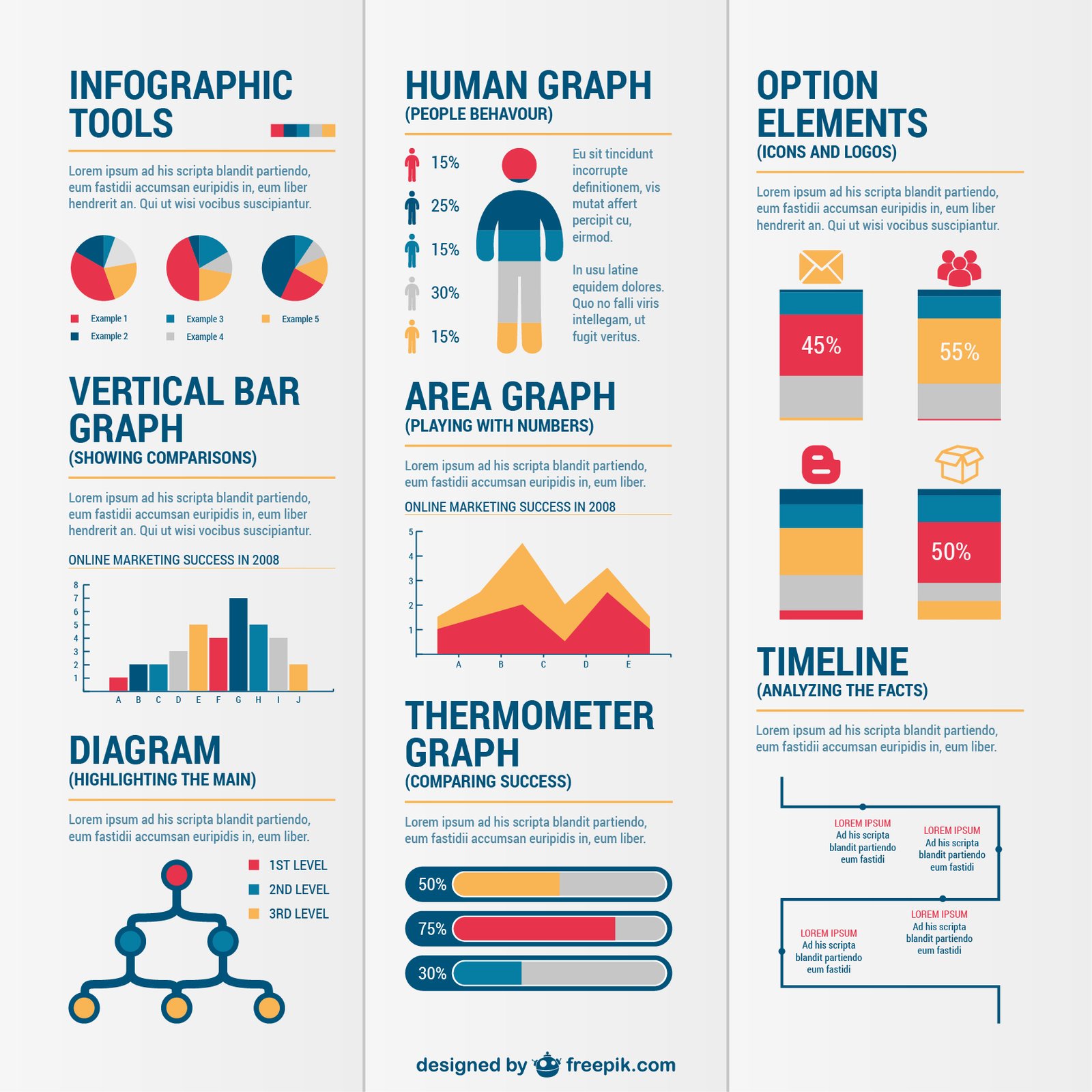
Infographics promote longer session time
What evidence should help a niche emerge?
At NBL, I have noticed that data-driven articles have recorded encouraging engagement time in GA4.
That is an observation from my own site, not a controlled experiment. I cannot conclude that a table caused someone to stay longer, or that every data-led article will outperform every other format.
But it gives me a question worth investigating.
Which kinds of questions, formats, and topics consistently produce meaningful responses?
| Signal | What it may help me understand | What it cannot tell me alone |
|---|---|---|
| Search impressions | Whether pages appear for relevant searches | Whether readers find the article useful |
| Visits | Whether people arrive | Whether they are the intended audience |
| Engagement time | Whether some visits involve sustained engagement | Why someone stayed, or whether they were satisfied |
| Email signups | Whether readers want an ongoing connection | Whether they will eventually buy |
| Reader replies | Which needs or questions resonate | How representative those readers are |
| Relevant link clicks | Whether a recommendation attracts interest | Whether it results in a sale |
| Revenue | Whether an offer converts | Whether the model is sustainable |
| My willingness to continue | Whether the work suits me | Whether sufficient audience demand exists |
No single metric should choose the niche.
I am looking for a pattern: useful work I want to continue, readers who respond, and a plausible business relationship between the two.
A low-traffic blog is an early experiment, not a verdict
NBL does not have a large audience.
That means I need to be careful about drawing conclusions. One unusually engaged visit is not a trend. A quiet article is not necessarily a failed topic.
For now, I can record observations without pretending they are settled findings:
| Observation | A question to investigate |
|---|---|
| A research-led post receives longer engagement | Does that pattern repeat across similar posts? |
| A subject feels energising to explore | Can I develop useful depth without exhausting it? |
| A reader asks a follow-up question | Would answering it help other readers too? |
| An article receives visits but little further action | Does it offer an appropriate next step? |
| A topic produces several strong ideas | Do they belong as separate articles or one substantial resource? |
This lets me learn without redesigning the whole site after every small fluctuation.
It also leaves room for the possibility that some ideas need more time—or a better presentation—before I can evaluate them.
A topic-first experiment you can try
You do not need to reorganise your entire site to explore this approach.
Begin with a question and a small, connected body of work.
| Stage | Action | What you are trying to learn |
|---|---|---|
| Start | Choose a topic you genuinely want to investigate | Whether there is enough substance to explore |
| Map | Draw its questions, components, and connections | Which possibilities are meaningful |
| Select | Choose one central article and a few supporting ideas | Which pieces deserve separate treatment |
| Structure | Connect related resources through navigation and useful links | Whether the reader has a clear route through them |
| Publish | Create the strongest piece you can reasonably produce | Whether it serves the intended need |
| Observe | Record relevant responses and limitations | What deserves further investigation |
| Refine | Expand, combine, reposition, or stop | What the evidence and your experience justify |
The aim is not to publish at a frantic pace.
It is to make the next editorial decision better informed than the last.
What this means for NBL
I am a hypotheses person.
I like beginning with a question, following the connections, and discovering something I could not see at the start.
NBL is not a content mill. I want it to be a place where curiosity becomes useful editorial work.
That includes ideas, lifestyle topics, niches, and the business of blogging. It includes the practical question of how all those interests fit into a coherent blog structure.
My recipe-card scamp reminded me that the thinking can begin visually. A question can become a drawing. A drawing can reveal an investigation. An investigation can become an article.
I do not have to force every possibility into the same format.
And I do not have to pretend the final positioning is already settled.
Choose a starting point, not a permanent identity
I am not arguing that niches are unnecessary.
I am questioning whether every blogger should be expected to choose one before they have done enough publishing to understand their own interests, audience, and opportunities.
For some, niche-first is right.
For others, a topic is the more useful beginning.
Choose something worth exploring. Build a blog structure that makes the exploration coherent. Publish selectively. Pay attention to what readers do—and to what you want to keep doing.
Then refine the position as the evidence becomes clearer.
That is what I am doing with NBL.
I am not waiting for the perfect niche before I begin.
I am giving the work enough room to show me what it could become.
If you liked this article, you’ll enjoy this workbook. Download it here at no cost to you.
Feature photo image: Viitaly Gariev/Unsplash
Have a list of topics you can’t wait to share?
Are you starting a blog and ready to invest in hosting?
Get 20% off hosting with Hostinger. It’s what I run my own sites on, and it’s the first thing I recommend to anyone starting a niche project. Grab the discount here.
Or perhaps you want to build a food blog or recipe site?
Here’s how to build revenue with your recipes: Once you’ve installed your site, picked a theme and customised your header and top nav – write your first recipe post. Don’t be nervous. Just keep the recipe simple and helpful.
Once you’re done, sign up with WP Delicious’s affiliate program and let your very first recipe post earn for you.
If you’re a just past ‘beginner’, you are ready to start tracking keywords.
Once your site is live, tracking the right keywords is what separates guesswork from strategy.
I used this keyword tracking tool to build — and successfully flip — a food and nutrition blog with only five tracked keywords. Focused, intentional, and it worked. Start tracking yours here.
Still unsure about your niche?
Work with me to uncover your ideal niche – I use real-time search intent research so you don’t waste time guessing.
Or perhaps you need to know what type of niche suits your blogging energy – in that case, start here.
Subscribe below to receive updates from the Lab.
Disclosure: While this publication uses AI tools for data collection and analysis support, the research questions, hypotheses, and core insights are the human author’s original work. NBL may receive a commission from some referral links mentioned in this article.


